11/25/2007

ESPECTROS DEL GRUPO GAUR


Espectros del Grupo Gaur, 1966-2007

10/24/2007

Archaelogies of the future, sala rekalde, 2007

Martin Beck, "An Image guide...", foto: Begoña Zubero


Mathias Poledna, "Untitled", "Version", foto: Begoña Zubero


Archaeologies of the Future
Martin Beck / Carol Bove / Dora García / Mathias Poledna / Pia Rönicke

Curator: Peio Aguirre
sala rekalde, Bilbao, 27 September to 2 December 2007


This exhibition revolves around an archaeology of different historical aesthetic forms coexisting at the heart of recent artistic practices. Rather than starting out from this vast storehouse-cum-archive of forms that is History, understood as a linear narrative that stretches from the ‘past’ to the present day, the exhibition focuses on examples and cases from ‘now’ that use different forms of historicity and/or historicism. Archaeology, as everyone knows, centres on research into history and is a discipline based on strict methods of chronological dating, period, epoch, style, school, etc. Only after archaeological analysis of material signs and remains is it possible to enter into anthropological studies on who made what, why and to what end.

One of the underlying intentions of this group exhibition of work by five artists is to reflect on the sedimentation of time in highly codified cultural forms that range from the realm of everyday objects to the configuration of the environment around us, including the formation of artworks. Architecture, design, the moving image and popular culture all intermingle in an X-ray of the cultural present with one eye on yesterday.

There are few cultural productions that transmit as much codified information to us as the cutting edges of image, art and design. The diagnosis of the present is stratified to the extent that “one day we’ll need archaeologists to help us guess the original storylines of even classic films” (William Gibson, Pattern Recognition, G.P. Putnam’s Sons, 2003). This sci-fi novel about the advent of new modes of consumption makes its appearance here like a reference. In a pop-cultural context, what we tend towards is the recognition of forms, patterns and models. In identifying ourselves with aesthetic elements, we mould subjectivities. What is going on here is a contradictory balance between the standardisation of ways of life and the need for their continual singularisation: a “mirror-world” in which everything is recognisable without being alike, in which everything looks like everything else but is different.

The artistic practices of Martin Beck, Carol Bove, Dora García, Mathias Poledna and Pia Rönicke share this analytical sensitivity towards the artificial constructs that intersect historical memory with mass culture, and are part of a tradition of critique that has continued to question the universal concepts of the aesthetic experience of high modernism through to the present day. It is in the form, the style and the language that the differences between the projections of the Sixties to the present are visible. Style (as residue) in this context is a carrier of the ideology of the times, dissolving the historical within the aesthetic, midway between timelessness and periodization.
This exhibition borrows its name from Fredric Jameson’s book, Archaeologies of the Future: the Desire called Utopia and other Science Fictions (Verso, 2005), a title that is an entire programme in itself. Nevertheless, its origin lies in the conclusion of the author’s previous book on modernity and modernism, A Singular Modernity (Verso, 2000), when he writes that “Ontologies of the present demand archaeologies of the future, not forecasts of the past”.

This exhibition as a visual essay is an attempt to short-circuit the archaeologies of the past (those of modernity) with a scenario of historicism close to science-fiction.
Another of the notable features lies in the methods used by all the artists, which include appropriation, quotation, re-contextualisation, revision, design, reference and self-reference, and manipulations of style, with culture being read as a second nature.


Pia Ronicke, "Whithout a Name", foto: Begoña Zubero

8/30/2007

Anti-marxist workers


This year Lyon Biennial will feature a colaboration with Juan Pérez Agirregoikoa. Under the title '00s - The History of a Decade That Has Not yet Been Named' artists are chosen in relation to a selected group of curators. I decided to work close with Juan, an artist born in San Sebastian and based in Paris since early 90's. The experience will be reported, or not.
Image: Juan Pérez Agirregoikoa, 'Anti-marxist workers', drawing, 2006.

7/29/2007

IMAGENES DEL OTRO LADO


Bajo determinadas condiciones de luz, los objetos cambian de aspecto. Un foco rojo, una habitación oscura, y todo se vuelve del revés.* Bajo específicas irradiaciones lumínicas, los cuerpos se transforman. Día y noche. Luz de día y luz de noche.
El ojo es fotosensible a la oscuridad. Reflejos del anti-sol.
Los artistas presentes en esta exposición parten de la oscuridad como telón de fondo. De esta profundidad surgen imágenes misteriosas; rostros, siluetas, atmósferas, sonidos, y también animales. Una sensación de quietud infunde poco a poco al espectador. Situadas entre la acción, la no-acción y el estatismo, las escenas han sido en parte predeterminadas, o literalmente organizadas para que algo suceda. Un guión básico estructura la imagen en movimiento. La cohesión de la imagen se produce por efecto del tiempo fílmico. La duración va dando consistencia a la imagen, aflorando una doblez escondida en lo más cercano, que cuando es mirado con detenimiento muestra una extrañeza que ya estaba ahí, al otro lado de lo real.

* ‘Bright light, dark room…’ in Depeche Mode, ‘Photographic’ (Speak & Spell, Mute, 1981)


Under certain light conditions, objects change their aspect. A red light, a dark room, and everything is upside down.* Under specific luminal irradiations, bodies are transformed. Day and night. Daylight and nightlight. The eye is photosensitive to darkness. Reflections of the anti-sun.
The artists in this exhibition use darkness as a backdrop. Mysterious images come out of that depth: faces, silhouettes, atmospheres, sounds, and animals, too. Little by little, a feeling of stillness takes over the spectator. Straddling action, non-action, as stasis, the scenes are partly pre-determined, or literally organised to make something happen. A basic script is organising the image in movement. The cohesion of the image is achieved by effect of the filmic tempo. Duration gradually provides the image with consistency, bringing to the fore a fold hidden in what is nearest, which, when looked at in detail, reveals a strangeness that was already there, on the other side of the real.

* ‘Bright light, dark room…’ in Depeche Mode, ‘Photographic’ (Speak & Spell, Mute, 1981)

Fragmento del texto y cartel de la exposición que comisarié en el CAAM de Gran Canaria.

5/23/2007

The Great Method: Casco Issues X


Casco Issues X: The Great Method

Launch: 23 may 7-10 pm

with a performance by Falke Pisano at 8 pm

Please join us to celebrate the launch of Casco Issues X on Wednesday 23 May, with a new performance, ‘Affecting Abstraction, Part Three’ by Falke Pisano.
Edited by Basque writer/curator Peio Aguirre and Casco’s director, Emily Pethick, Casco Issues X addresses the question of methodology in artistic practice, thinking about the presence or absence of methods, their ideological connotations and historical backgrounds, in order to examine some of the conditions that surround contemporary art production.

To think about method implies a reflection on the working procedures that all of us employ in our activities, and the – hidden or visible – processes that enable something to come into being. Where as in science the rules of investigation, steps and techniques of analysis and knowledge are very established, these days could one speak of one (or many) defined artistic methods in contemporary cultural practices?

Falke Pisano’s ‘Affecting Abstraction, Part Three’ explores the possibility of implementing a human presence in a hermetic abstract construction of language by performatively outlining how this could be achieved.

Casco Issues X contributors: Peio Aguirre, Stuart Bailey, Ricardo Basbaum, Martin Beck, Copenhagen Free Universtiy, Stephan Dillemuth, Wendelien van Oldenborgh, Falke Pisano, Florian Pumhösl, Stephan Willats, Haegue Yang
Design: Julia Born and Laurenz Brunner

Casco Issues X: The Great Method is made possible by the generous support of the Mondriaan Foundation, Prins Bernhard Cultuurfonds and Gemeente Utrecht. Available through Casco and Revolver (www.revolver-books.de).


Bertolt Brecht, Me-ti

5/06/2007

Cities and Architects


Welcome to the cities of architects, welcome to the cities of politicians


This image comments my previous post (like a meta-commentary of it). This is a rather a recent image from the area of Bilbao, a picture taken (and appropriated) from the newspaper El País. The article was about the new Isozaki towers. But the polemis has been other: that about architect Santiago Calatrava complaining about the "new addition" to his own "arty" bridge... There has been a trial and it seems Calatrava is winning against Bilbao's city council.

Bilbao and Carhartt

This is an image I got from artist Jakob Kolding allready time ago. It features the public Jorge Oteiza's sculpture which stands in front of the town hall. Entitled "Variante ovoide de desocupación de la esfera" (2002), this monumental sculpture serves here as the principal motive for a promotional campaign of multinational clothing brand Carhartt. The sculpture holds a young man skating and there is also another hip cool guy passing by there. Of course these alements are artifically added to the image like in a kind of collage. In fact, it might be also a Jakob Kolding artwork in itself, but it is not. Rather it is as if someone from the design section of the company will follow Kolding's art. The background of the image also contains meaningfull information: this photograph is taken just before the construction of the two highrises by Arata Isozaki. The derricks are visible and somehow periodize the image of Bilbao, inmersed since more than a decade in an ininterrupted and endless renewal process. But it also comments Jakob Kolding's own work, like the posters he made in 2003 for D.A.E. Donostiako Arte Ekinbideak, one of then featuring a similar collage, street-skaters standing in front of another sculpture by Jorge Oteiza in San Sebastian. (Another detail represents a skater in Chillida's "Comb of the Winds"). All this reminds a lecture at the Guggenheim Museum in Autumm 2004, when showing the Kolding's collages and other contemporary "uses" of Basque myths such Oteiza, some architects felt irritated of such irrespetous treatments. Those architects are supposed to protect the meaning of ancient art, and they are blind to the fact that old art serves today for city branding and promotional campaigns of multinational brands.

3/07/2007

I.N.I.T.I.A.L.S. B. B.


Gravestone for I.N.I.T.I.A.L.S. B.B.
February 10, 1898 – August 14, 1956
Berlin Mitte Chausseestraße
Typeface: Helvetica
Colour: White

1/19/2007

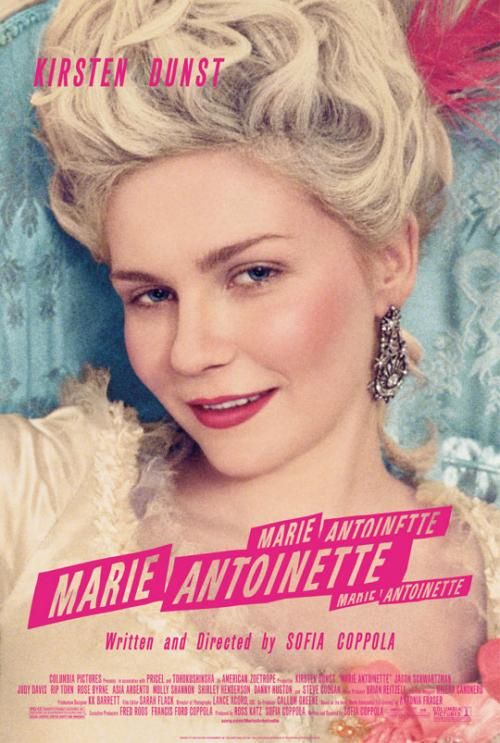
Maria Antonieta o, ¿el regreso del Posmodernismo?


La película Maria Antonieta; la Reina Adolescente de Sofia Coppola debe verse como si de un ejercicio de estilo se tratara. Sin embargo, dificilmente una mirada distanciada e irónica puede salvar un producto bien empaquetado y envuelto en celofán por mucho que nos empeñemos en ver el filme de la manera más posmoderna posible. Su posmodernismo es el del "pastiche", es decir, esa forma que adopta la tendencia a historizar de manera que los clichés, las ideas y los estereotipos que tenemos del pasado simplemente convergen en una representación ficticia. Su historicismo (que no historicidad, pues ésta entiende la posibilidad de experimentar la historia de una manera activa, que reoriente nuestro futuro colectivo), es el de la acumulación de convención sobre convención, el de la pérdida de la "historia radical" o simplemente el regreso de la moda nostalgia.
Una pelicula como ésta sobre el personaje Maria Antonieta podría haber tenido lugar en un momento más concreto del desarrollo posmoderno. Sin embargo, su llegada tardia añade todavía una capa significante más. Ya no se trata sólo de historizar banalmente la frivolidad cortesana de la monarquia francesa y europea en un momento pre-revolucionario, sino que su historicismo se concentra en otro momento cumbre; ese que señala un instante post-punk a finales de los 70 y comienzos de los 80, o ya un instante new wave muy concreto (Ceremony de New Order y All cats are grey de The Cure como elementos clave). Lo que Coppola recrea es el mito de Maria Antonieta bajo coordenadas de la historia del pop.
Si bien ese segmento temporal de finales de los 70 y comienzos de los 80 alberga en su seno el propio germen periodizador (los regresos al pasado de los Nuevos Románticos, el diseño gráfico de Factory Records y otras claves de "white label" en las poéticas post-punk, new wave y pop, mezclados por tendencia en moda de miradas hacia atrás). La complejidad de estas referencias vistas desde el momento presente quedan aplanadas en el film. Los títulos de crédito son ya de por sí una declaración de intenciones: Tipografía rosa sobre fondo negro abusando de la estética del collage en claro homenaje a la estética punk (¡Never Mind the Bollock!) y mezclado con la del estilo revista/fanzine. Lo mismo con el poster, una imagen irónica de Kirsten Dunst con la ya mencionada tipografía debajo. ¡Puro The Face, puro ID del comienzo! ¡Y qué decir de la elección de The Strokes!
Un detalle que no pasa desapercibido es el de un elemento deliberado que juega al olvido o al gazapo. Me refiero a ese instante en el que conscientemente aparecen unas zapatillas de la marca Converse o John Smith (de color lila) en medio de una orgia de zapatos de época. Es como si la Coppola tuviera asesores teóricos del mundo del arte o de la teoría posmoderna. Esa escena está literalmente inspirada en Andy Warhol, como si una orgía de zapatos y pasteles de crema y fresas se mezclaran impúdicamente.
Pero lo de las zapatillas tiene su doble vuelta, pues ese modelo permanece ya como un prototipo de zapatilla típicamente ochentera. Además en uno textos canónicos de la Posmodernidad, La lógica cultural del capitalismo avanzado de Jameson, la comparación entre el cuadro de Van Gogh Un par de botas (y el análisis de este cuadro por Heidegger en su célebre El origen de la obra de arte) contrasta con la mirada distanciada de los Diamond Dust Shoes del propio Warhol (a lo que hay que sumar otro análisis deconstructivo de los zapatos de labriego de Van Gogh por parte de Derrida). Quiero decir que, uno de los análisis más rigurosos entre modenirmo y posmodernismo se estableció durante los ochenta en esos dos ejemplos de zapatos (Van Gogh y Warhol) y algo parecido, inconscientemente claro está, viene a hacer Coppola con la mezcla azarosa de unas Converse ochenteras con unos zapatos cercanos a los de Warhol pero en clave pre-Revolución Francesa. Es sabido, también, que el eclecticismo fue uno de los recursos que predefinieron la estética posmoderna.
Una vez cerrado este paréntesis formal, lo que visualemente el filme traslada es similar a lo que se vio en la celebrada Lost in Translation. Largas divagaciones visuales donde pasa poco o nada mezclado con planos esteticistas más propio de anuncios comerciales televisivos dirigidos al sector femenino. ¿Es acaso el buen gusto del que hace gala la directora una garantía de cara al espectador? Lo que mejor el filme rezuma es todo el catálogo de Vogue y Elle (de la que la directora es un nuevo icono, enblema de cierta modernidad consumista donde parece haber encontrado un nicho de mercado). Porque Maria Antonieta es inofensiva y no hiere. Tampoco provoca. El hedonismo soft de la reina es ajeno a la provocación y al odio. En su lugar, activa una más que buscada identificación con el/la espectador/a. Ante tanta convención y trampa, horas de visionado de películas mainstream sacadas de los alumnos de su padre y de Martin Scorsese, lo que uno desea es que el cuento se acelere hacia su trágico final. No tenemos que exigirle a Sofia Coppola que nos dé una clase de Historia (con la masa revolucionaria diluida y inexistente, que apenas aparece en escena) sino al menos que mantenga el pulso narrativo y que su barroquismo se traslade no sólo en los bellos planos, las pelucas y el paisaje de Versalles, sino también al modo de hacer cine. Pero tampoco roza el neo-barroco.
¿Y qué decir cuando la reina y sus cortesanas descubren la naturaleza, el campesinado, la vida en el campo? Esa visión no debe estar demasiado alejada de la propia mirada de la Coppola.
Se nota igualmente que la directora es gran aficionada al arte, siempre Warhol pero también Karen Kilimnik (esa imagen final del salón versallesco destrozado por la revuelta podría estar entresacado de algún cuadro de la pintora norteamericana).
Se podría decir incluso más, que Coppola ha tenido a mano unos buenos catálogos de Kilimnik para inspirarse, si es que no posee ella misma unas cuantas pinturas...
Sofia Coppola es al cine lo que Heineken a la cerveza (Maite dixit). Tanto por sus intereses, más concentrados alrededor de todo lo que rodea al cine (y a la cerveza) como por las intenciones distraidas del espectador cinematográfico (y por ende del consumidor de cerveza).
La Coppola continua su trayectoria cinematográfica con la convicción de que acudir a fiestas, inauguraciones y saraos, y un eclecticismo consumista en arte, moda, música y demás tendencias es suficiente para ser considerada como una autora.

11/27/2006

THE PUBLIC CLUB

Hi, I received this from Felix, the Dutch version of the text is allready circulating in the Netherlands with quite a lot of response. Everyone can participate and suggest ideas for The Public Club.

The Public Club
This statement is a starting point and invitation to The Public Club; an agency of independent writers, designers, artists preoccupied with, and working in the public domain. It is in our wish to come to an agency that addresses the individual approaches and brings them to another level of recognition. In fact, the Public Club should not have a logo but a communal signature.
The form and structure of this network of connected practices, the agency-without-an–office is subject to discussion.


In recent years public services have developed into a market-player. Public services such as the media, energy, health care, social welfare and cultural institutions have become increasingly detached from the ideal of the common good, and the policies relating to the various spheres of public life are no longer oriented towards their original reason for being. They have become increasingly concerned with the ideals of the market –characterized by a growing obsession with a return-on-investment, and efficiency.
In this new context, whereby strategies from the market are being put into place within the public domain, citizens become consumers – they are addressed as consumers and increasingly respond as consumers.
Collective memory, the sharing of history and place, and all others characteristics of a well functioning society, seem now to be out of step with the mission statements of these Quangos and other executives of the public domain.

This development is not incidental, it can be explained historically. Before accepting such conditions as irreversible we must take time to consider a possible counter-strategy. Designers, intellectuals and artists are concerned with, and produce work within, culture. Cultural practice is an instrument that allows us to make fundamental encounters that enables us to think beyond reality (reality is always a slippery thing to define, but, for now we will define it as what we know or what is being conceived as possible).
The neo-liberal concept of the split market-culture can't continue, one should choose between the parallel worlds of the public and corporate sphere. Not that they exclude each other or have to be conquered and challenged, but just that they are different. We choose culture. The Public Club is its agency.

The field in which the Public Club operates is the public domain; the place where beauty and friction meet, where a balance between the individual and the collective exists. Ideally it is the domain where we share, meet or collectively produce without instrumentalization or profit. This makes it, by definition, a temporary situation and a collective condition – a product of collective interaction. The question is not "where" or "what” the Public domain is, but rather, "when".
During the 20th century public services were falsely identified with the public domain. As if the state set and maintained the preconditions for the public domain. The public club challenges this.

The public domain is international

It's an illusion to think that Globalization or EU-zation still have to come because they are already here, which means the public domain is already supra urban and supra national - whether it’s about the free movement of people, labor or culture.
Also in the cultural field the desire to organize culture nationally leads to unreal
competitive positions. One can see this schizophrenia in the different biennales where the situation of nationally organized pavilions and international curators, artists, designers or architects is kept in place. Here culture becomes the cue ball of competitive culture-politics – the branding of a city, the branding of a nation.
The longing for a national identity does not finds its solution in the nostalgia of ‘national heritage’. The answer to the question of who we are can only be answered by sharing
culture publicly and not by positioning ourselves as Dutch, French or German – which will only ever define us through our difference to each other. The borders of the public domain aren't geographical, they are semantic and temporary.

The public domain is underground

Commercial and institutional parties dominate society and the true public domain is increasingly marginal in relation to them. Accepting this reality creates new possibilities: freed from its pragmatic function (the safety-net of public utility is transferred to the level of insurance) it can become a subversive domain: different, alternative and contradictory. The public domain is not the space to be designed or aesthetisized, but the playground wherein the untimely differences within the institutionalized worlds become visible and exchangeable.
Some design offices claim to "do" public space, but the paradox is that the public-ness of public space decreases as the design of it increases.

The public domain is experimental
Most of the tasks that belong to the public services - as guardians of the public domain – are now being organized by or through the market or through the offices of quangos. The Public Club considers the public domain to be the R&D department of our society, the breeding ground for new ideas and alternatives. Freed from the logic of performance, bureaucracy or direct implementation, it can experiment with new forms of collectivity in
areas as various as the media, energy, health care, social welfare and cultural institutions &c. These experimental models should not be mistaken for the "innovation" rhetoric that the knights of the creative industry proclaim – it represents another way of thinking, its goals are not to be the fuel or grease of corporate culture but to create alternative realms.
Freed from the implementation models things can be allowed to develop that can’t be developed elsewhere. With such models we can share and participate on the basis of curiosity and concern and need no longer be ruled by a profit motive imposed upon them.

11/20/2006

CORK CAUCUS and D.A.E.


Hi, this is the info of a book launch where Leire Vergara and I (as individuals related with D.A.E.) contributed with some toughts and reflections. Cork Caucus took place in the summer of 2005 in Cork (Ireland) and we were there presenting our work and also representing Donostia-San Sebastian. We had fun and also quite a lot of exchange. (Info Below)


----------------------------------------
25th November
The National Sculpture Factory is delighted to invite you to the launch and celebration party for the new publication:
Cork Caucus: on art, possibility & democracy

Cork Caucus: on art, possibility and democracy, is a 500+ pages book containing newly commissioned critical and theoretical essays on thematic and dialogical issues emerging from the NSF project/event Cork Caucus (as part of Cork 2005) as well as representing the discussions, presentations, commissions and events that took place as part of the event itself through edited transcriptions and full-colour visual essays.

As well as contributing to practice-based and academic studies on contemporary art, it is a unique addition to new thinking about contemporary art and culture, in particular as it relates to democracy and political thinking.
Contributors to the publication include:

Gayatri Chakravorty Spivak and Chantal Mouffe (keynote lectures and post-lecture discussions)

Catherine David, Vito Acconci, Lukas Einsele, WHW, Phil Collins, Jan Verwoert, Shane Cullen, Eamonn McCann, Haegue Yang, Gerald Raunig, Sarah Pierce, D.A.E. (Peio Aguirre and Leire Vergara), James Elkins, finger, Jeremiah Day, Keri Jones, Cemeti Art Foundation and Kunci Cultural Studies Centre, Fergal Gaynor, Simon Sheikh and Ashley Hunt, Bik van der Pol, Surasi Kusolwong, Sarat Maharaj, Maria Eichhorn, and more.

Editors: Trevor Joyce and Shepherd Steiner
Visual Editors: Dobz O'Brien and Can Altay
Publishers: Revolver
Commissioners: National Sculpture Factory

"Our approach has been, through words and images, not merely to record the significance of the event, but to attempt to convey a sense of its variousness, complexity, and aesthetic and intellectual range."
- quote from editors Trevor Joyce and Shep Steiner

10/24/2006

Art and Public Sphere


This is a new book entitled What does Public Mean? publisehd by the new publishing house Torpedo, based in Oslo, and edited by Tone Hansen. We have contributed (Leire Vergara and I) with a fragmentary text written a duo that focuses at the experience of D.A.E. Donostiako Arte Ekinbideak in San Sebastian. The text mixes reflections about structural and ethical conditions for a possible art organisation based on some grassroot ground. It also contains a large section of footnotes describing some of D.A.E. projects as well as contextual information about changes in cultural policies in the San Sebastian of the post-Manifesta era. The question of a participative Public Sphere or Public Arena it has been pretty much discussed in the last years in the context of contemporary art. The Habermasian concept of Offentlichkeit has been used in the light of some new developments in the organisation of space that offers a reconsideration of previous ideas of the "public", "publicness" and "publicity". The genesis of our contribution in this book comes from a presentation we did at UKS in Olso, late 2004, in the framework of Gadar Eide Einarsson's Come and Take it exhibition. Since then we have a productive intelectual exchange with artist Tone Hansen developped with the ocassion of We Rule the School workshop in Arteleku, San Sebastian. The result is a kind of resumé or re-assesment of the brief history of D.A.E. Donostiako Arte Ekinbideak. Besides us the book contains contributions by Ina Blom, Gardar Eide Einarsson, Geminidas and Nomeda Urbonas, Stian Grogaard, Tone Hansen, Marianne Heiner and Cornelia Sollfrank.

9/27/2006


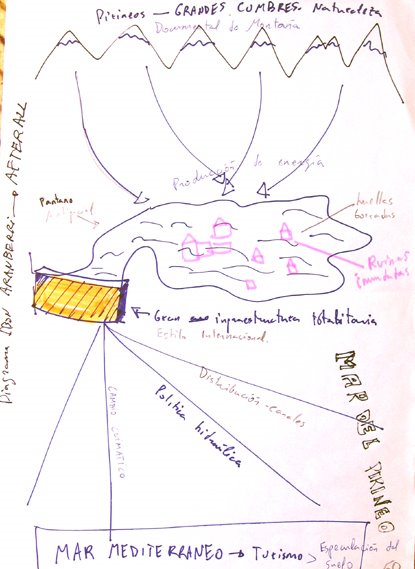
This is a diagram I made as a scheme for an essay I was writing on artist Ibon Aranberri. The essay atempted to draw the "wholeness" of his body of work, focusing in the analytical side both in methods and procedures as well as in his discoveries of "new" content. I was doing this graphic in order to explain myself how the essay should be drafted. At the same time, I was editing and coordinating a catalogue together with Ibon, namely the new Wiro-Containment publication. We were at the decissive moment of closing the whole stuff at the printer, when I showed him this sheet of paper, just in order to discuss further developments in the essay. He suddenly said: "It's done, this goes in the publication!". So actually it is published at the last page of the Wiro-Containment

Here are some short excerpts of the essay published by Afterall # 14 in London and Los Angeles.

"Throughout this process, the wheel of the production system keeps turning. The original cycle (melted snow, sea water and rain) is constantly intervened. Here the mountain documentary overlaps with the sea of mountains, as it adopts as a leitmotif the political management of water. Questions of domination and control reveal an underlying will to power. The damns, catastrophic zones with an appearance of normality, propose an imaginary space in which the kindest metaphor is that of the flood. The cartographies of disappearance empower these non-places as fictional stages. This poetics is based on contents that incite social debate in order to open new reflective territories".

Another excerpt in Spanish. "Las grandes infraestructuras del desarrollismo construidas en las décadas de los 50 y 60 sirvieron como tests del anacronismo del Estilo Internacional, mutaciones del brutalismo convertidas más tarde en fuente de atracción para visionarios de la arquitectura fascinados por el influjo dominador de una estética capaz de abarcar cualquier cosa. El “milagro español”. Ésta fue la expresión acuñada por el régimen franquista para definir la aceleración de la industrialización durante aquel periodo. El crecimiento de España en el sector industrial y económico fue el mayor de las sociedades Occidentales. (...) De nuevo el espectro del totalitarismo hace su aparición. Esta vez en una red de enclaves artificiales, presas y embalses con los efectos ecológicos, sociales y económicos que generan."

9/08/2006

Conspiradores del futuro


 En tiempos recientes, a raíz del caos producido por el terrorismo internacional, hemos asistido a un colapso de las nociones de seguridad, orden y conflicto. Esto es algo que cualquiera reconocerá, si bien hay una diferencia en el hecho de que gente anteriormente confinada a un lugar preestablecido, con conciencia principalmente local, está comenzado a imaginar y a repensar los sistemas invisibles que rigen el mundo en su totalidad, y por lo tanto también sus vidas. El 11-S puede verse ya como la fecha clave del surgimiento de una esfera pública global. Individuos a lo largo y ancho del globo (ya colectivizados bajo la rúbrica de espectadores o públicos) pueden ahora obtener cierta sustancia proveniente de los periódicos y otros media, para acto seguido reformular su propia idea crítica global del estado de las cosas. Momentos de sobre-exceso de información donde es posible aislar fragmentos de realidad para comprobar si debajo del sesgo de ese pedacito aislado somos capaces de descubrir la llave de nuestra situación global colectiva.

Existe también la extendida idea de que sólo cuando algo ocurre lo bastante cerca de uno, es posible empezar a tomarse las cosas seriamente. La coyuntura actual de sobresalto se presta al juego de la predicción, la especulación y el deseo de ganar terreno al control del día después. En la radio se habla del nuevo desorden internacional.

En esta nueva esfera pública global, como la teórica Susan Buck-Morss ha definido, analizar el curso de los acontecimientos, ¿es necesario resucitar para estos tiempos modernos la vieja, setentera y excitante trama de las teorías conspirativas y el complot como estrategias analíticas al servicio de la explicación de la realidad? La creencia en la existencia de las conspiraciones es como la superchería.

La totalidad como conspiración. Éste era el título de un texto de Fredric Jameson donde el teórico norteamericano ofrecía una teoría de la conspiración en relación a formas de cultura (principalmente cinematográficas) donde lo que cuenta es “el propósito y el gesto, y no estar convencido de la verosimilitud de ésta o aquella hipótesis conspirativas”, pues es en este intento de aventurar hipótesis donde se realiza el deseo de trazar mapas cognitivos que designen la totalidad ausente o lo irrepresentable.

Esto es algo que ocurre históricamente en momentos de crisis: Watergate, la guerra fría, la ex Unión Soviética, Irak, etcétera. Instantes cinematografiables todos ellos. Nuestro recuerdo permanece gracias al imaginario del cine. La fantasía de que el Pentágono está agujereado como una madriguera por galerías subterráneas que bien podrían equivaler en kilómetros andados a los pasillos del edificio de arriba. Pero la ficción no es más que la realidad de vuelta de todo.

Existe un abuso de las teorías conspirativas para explicar cualquier acontecimiento nacional o internacional sólo comparable a la fascinación y atracción que esas mismas teorías ejercen. Éstas han servido para explicar tanto el asesinato de Kennedy como la desaparición de Brian Jones, miembro fundador de los Rolling Stones fallecido bajo extrañas circunstancias, pero también se han convertido en tendencia de análisis político tanto para la derecha como para la izquierda.

La hipótesis de que los acontecimientos no son fruto ni del azar, ni mucho menos de la lógica de las instituciones y sus correspondientes políticas sino son el resultado de obstinadas maquinaciones secretas de individuos antidemocráticos reunidos, actuando en la sombra y usando maniobras excepcionales.

La conspiración también como un método para sublevar el orden establecido, pero, ¿cuál? Para alguien como Brecht, el del comunismo o “Gran Orden”. O el capitalismo como “Gran Desorden” y viceversa. Dialécticamente ejemplificado en este fragmento: “De momento estáis aquí dispuestos para el gran desorden, luego tendréis que estarlo para el Gran Orden. En realidad, para vosotros se trata de poner orden en vuestros asuntos, al hacerlo, crearéis el Gran Orden”. Y añade: “Las malas experiencias que habéis tenido con el Gran Desorden puede que os guíen un poco…”

La seducción y el misterio que provocan estas teorías siempre sorprendentes de la conspiración, y que hoy día sirven para cualquier acontecimiento, se explica en parte en que en su tentativa a trazar hipótesis muchas veces inverosímiles, reflejaría alegóricamente este Gran Orden Mundial ausente.

¿Qué era sino sutil conspiración la guerra de desprestigio entre ciudades rivales, principalmente Londres y París, en su lucha por ser sede olímpica? ¿Interpretaba Chirac un papel de teatro comentando la escasa calidad culinaria de los británicos? ¿Simples golpes bajos que no vienen a cuento? ¿ Qué decir acerca de la incómoda pregunta del monarca Alberto de Mónaco a la candidatura de Madrid en materia de seguridad anti-terrorista un día antes del 7-J? ¿Una pregunta insidiosa y casual proveniente de un intento desestabilizador por parte de algún rival?

Ya hemos empezado aquí mismo a urdir teorías, pero éstas no son más que eso, simples teorías. Sin embargo, el grado de especulación que conllevan animan a crear un juicio crítico en el seno de grupos de análisis e personas con sentido crítico. En el fondo, todos tenemos nuestras propias teorías al respecto en base a ésta o a aquella hipótesis pergeñada por este medio de comunicación o aquel otro. Y este juicio crítico forma parte ahora de una esfera pública globalizada a escala mundial. Slavoj Zizek nos recuerda que “hoy, el colmo de la ideología sería el rechazo crítico-ideológico autosatisfecho de las teorías conspirativas como meras fantasías” para acto seguido comentar que la destrucción de la red de transportes de Los Angeles no fue una expresión de la lógica objetiva del capital sino el resultado de una conspiración efectiva por partes de compañías auto-motrices, constructoras de caminos y otras fuerzas en el desarrollo urbano.

Otra autoridad en la materia, Don DeLillo, autor de la voluminosa reveladora y metafórica Submundo (Circe), ha sugerido que nuestra pasión contemporánea por las teorías de la conspiración es en parte una reacción a la secularización de nuestra época – fantaseamos con una autoridad invisible, poderosa, pero conocida e identificable-.

Esta fascinación arquetípica está descrita irónicamente como lugar en el siguiente pasaje de Submundo: “Había un lugar llamado el Café de la Teoría de la Conspiración. Estantes llenos de libros, bobinas de películas, cintas magnetofónicas, informes oficiales del Gobierno encuadernados en tapas azules”.

Los anteriores narraciones conspirativas (residuos de la guerra fría, espionaje industrial, Doctores Strangeloves y demás) son antiguallas que renacen a la luz de nuevos géneros. La anterior literatura conspirativa (la gran novela norteamericana de Thomas Pynchon a DeLillo) deja paso ahora a una ciencia ficción asentada en el presente.

En este contexto, es preciso analizar formas de narración visual y textual.
Mundo espejo (Minotauro, 2004) hasta ahora la última novela del autor de Neuromante, William Gibson, sitúa la acción en un esquema de espionaje donde la conspiración ya no es la de los gobiernos ni tampoco la de las super-potencias, ni siquiera la de las grandes corporaciones multinacionales, sino la mediana escala de los free-lance cazatendencias con sus hipersensibilidades hacia las marcas. Una conspiración que también es global. Orbitando alrededor de Londres, Tokio y Moscú en una delirante secuencia de análisis estilísticos, fobias y sutilezas del mercado.

Aquí, las técnicas conspiratorias son sencillas, equivalen a generar rumores, dejarse caer por un bar para acto seguido mencionar en voz alta al hilo de una conversación éste o aquel producto que todavía no existe. Ver los efectos en la gente. Generar nuevos modelos de comportamiento y consumo. En esto se ha convertido la conspiración, en generar nuevos patrones de consumismo.

Gibson sitúa por primera vez en su escritura los acontecimientos en el presente. Nos encontramos en un momento donde la ciencia ficción como producto colectivo se refunde con el género del espionaje y el complot, no ya en ningún futuro cercano, sino en el mayor de los presentes convertido ya en escenario de zozobra. Otro ejemplo no muy lejano, Milenio Negro (Minotauro, 2004) de J. G. Ballard, el más distópico de todos los novelistas actuales, es otro de esos libros basados en un presente que funcionan como escenarios de futuro que se adelantan a los acontecimientos. Como si la fantasía de cualquier escritor de ciencia ficción no fuera ya imaginar el futuro, sino predecirlo. Conspiradores del futuro. La clase media de Inglaterra inicia una revolución en las lujosas urbanizaciones de Chelsea Marina. Escribe Ballard: “Allí empezó la revolución de la clase media: no el levantamiento de un proletariado desesperado, sino la rebelión de la clase profesional que era la flor y nata de la sociedad”. Esta rebelión genera formas de violencia incontrolada, salpicadas por un atentado con bomba en la Terminal 2 de Heathrow con la ex-mujer del protagonista como víctima. “La clase media era el nuevo proletariado, la víctima de una conspiración secular, que por fin se deshacía de las cadenas del deber y de la responsabilidad social”. Si bien, lo que la novela parece respirar más que el ambiente terrorista de Londres, es ese otro olor a multitudes, manifestaciones anti-globalización con sus formas de violencia anti-sistema. A la luz del presente, la confusión lo contamina todo.

Lo decía DeLillo: la secularización creciente tiene la culpa. Pero nunca hay conspiración sin su otro par, que la recorre y le es consustancial en su función y en su forma, y que no es otro que la paranoia, ahora colectivizada. La paranoia como fantasía de la conspiración contra uno o una. Inicialmente individualizada (pues la paranoia es básicamente egocéntrica y vinculada el ego) y ahora trasmutada ya en producto colectivo, al igual que la ciencia ficción.
Un mundo subterráneo de cables y conexiones, grandes hermanos, inspectores de internet y cámaras de vigilancia controlando el espacio público 24 horas alimentan este delirio paranoico. La vigilancia de la más estricta intimidad y el control de la mala privacidad en nombre de la seguridad.

El deseo paranoico (a la inversa que la esquizofrenia) es típicamente derechista según Deleuze y Guattari. Sólo así se explica el populismo que rodea a las teorías conspirativas, ahora también usadas profusamente por estamentos progresistas. Esto no lleva a considerar un nuevo estadio; aquella de las teorías paranoicas de las conspiración.
Pero el último eslabón debamos quizás trazarlo en la forma de conspiración más inimaginable, terrorífica e igualmente irrepresentable, aquella que la une con el bíblico Apocalipsis, el fin del mundo.


Si La guerra de los mundos, Steven Spielberg reinterpretando a H. G. Wells, nos ha permitido regresar a un momento pre-trauma y contrastar el antes con el después, el pasado con el presente, quizás sólo nos quede ver películas de entretenimiento como retratos alegóricos esperando que nos informen fehacientemente del estado de las cosas aunque sea en su caótica y progresiva autodestrucción.